
March 4, 2026
Addis Ababa, 20 February 2018.Mt, (from Recruit)
Our Ministry has started holding a monthly forum under the name “workshop on urban and infrastructure” to strengthen the knowledge transfer in the field, generate new creative ideas and create a common understanding of our reform work.
And because in the second-ever forum, there is a gathering of policy resources that will enable the resolution of complex problems in the field through both scientific and practical knowledge, the focus is on our home development and delivery operations “focused on the subject of the home development collaborative and competitive model”
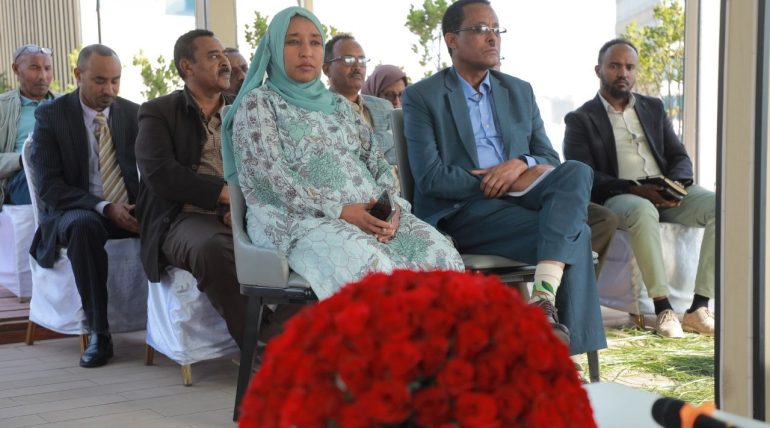
The explanation was given by the Minister of State for Housing and Urban Development, Yer Helen Debebe, who also chaired the forum, and the lead executive director of housing development, Tsegaye Moshe, who also spoke at the forum, including the ministry’s senior and middle management; senior executives of the respondent’s institutions; the heads of the Housing Development Bureau of the Addis Ababa City Government, developers of Realsted; other stakeholders and invited guests participated
Questions to the Honourable Ms Helen addressed the recently approved housing development policy and they said: How does cooperation be seen in terms of housing development? How does the collaborative model be defined by the public and private sectors? Which is the golden scales? What are the major policy issues? Is home a service or an Asset? What results are we saying the policy is successful when it comes to? Millions and others are questions that have addressed the details relevant to the housing development policy:
In response, Minister of State for Dignity, Ms. Helen Debebe, stated that the government was not responsible for overseeing the economy, but for entering areas with market gaps and creating a comfortable brokerage for the private investor, but rather for the desire to develop the housing development alone and to fulfill the role in a spirit of collaboration and competition, which is why it was necessary to maintain a public-private partnership, describing it as the main reason why it was needed
He stated that what was called the Golden Balance was to take the good things that existed in all systems and do better work and that they were paid for by 8 regarding major policy issues, namely: land supply; financial provision; provision of technological resources; purchasing power; full capacity of developers; strengthening rural home development; strengthening the home information management system; elaborating in detail that they were to build a strong home market system
In response to a question about whether a house is an Asset or a service, they also stated that the interest of the Inclusion Government was to have a house converted from an Asset to a Service.
He also answered a question about what issues the policy effectiveness measures when it is found to have met, stating that it met four factors: when there is a harmonious demand and supply of homes; when there is a system of improved and reliable housing markets; when improved rural homes are built and institutional capacity is built and when a digital system is worth it, and set the points that say
Finally, several ideas and suggestions that should be included in various documents preparing to land the policy from the panelists, as well as questions of transparency, were submitted and in a summary opinion after elaborate presentations and explanations, participants expressed gratitude for the active participation of participants, saying that the ideas and resources that I have made are what make it possible for them to solve the problems of our citizens together and create a country where citizens can enjoy themselves
