
October 30, 2026
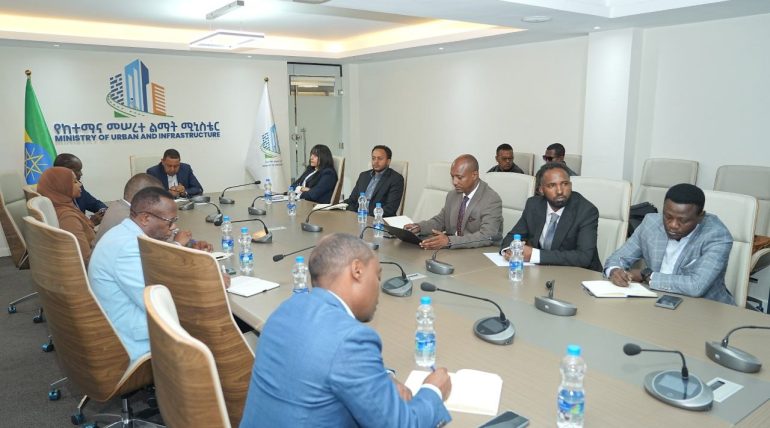
Addis Ababa, October 28, 2019 (Melmi) – The National Steering Committee for the Urban Productive Safety Net and Jobs Project held a regular meeting to determine improved payment rates for beneficiaries, raise awareness regarding the project’s overall objectives, and discuss the plan for the 2019 fiscal year.
Engineer Mohammed Abdurahman, Minister of Urban and Infrastructure, stated that the Urban Productive Safety Net and Jobs Project—implemented by the government in collaboration with the World Bank across 88 cities in the country—is making a significant contribution toward reducing urban poverty and addressing challenges related to urban cleanliness, aesthetics, and small-scale infrastructure. He further noted that this is one of the projects to which the government attaches great importance in its implementation efforts. Engineer Muhammed stated that extensive efforts are underway to ensure the project’s implementation aligns with the national journey—a journey aimed at moving away from a mindset of dependency, fostering productive citizens, and overcoming poverty. He noted that the results achieved thus far indicate that it is indeed possible to improve the living standards of many citizens and facilitate a tangible transition from dependency to productivity.
Mr. Berhanu Teshome, Head of the Urban Food Security and Developmental Safety Net Office at the Ministry, provided the Steering Committee with a detailed overview of the project’s performance over the past year, as well as key areas requiring future focus. He highlighted that the project is characterized by a high level of inclusivity nationwide. Specifically, in 88 selected cities across the country, citizens—identified through a fair and transparent process that accounts for gender, age, and disability—are successfully transitioning from dependency to productivity, thereby improving their livelihoods on a sustainable basis. For their part, members of the Steering Committee stated that, beyond the information provided in formal reports—which indicate that the project is effectively fostering inclusivity and tangibly transforming citizens’ lives in a manner that upholds their dignity—they must personally visit the cities to verify these outcomes. They emphasized that it is their responsibility to work together to find sustainable solutions for any challenges that may arise.
Furthermore, the committee members noted the need to enhance public awareness by clarifying any misconceptions about the program and fostering a clear, accurate understanding among the people.
At the federal level, the national Steering Committee comprises representatives from the Ministry of Finance, the Ministry of Women and Social Affairs, the Ministry of Labor and Skills, and the Refugees and Returnees Service. Newly appointed government officials within these institutions were provided with a comprehensive overview and detailed explanation of the project.
Finally, following an extensive discussion on the agenda items—which included the improved payment structure for beneficiaries and the plan for the 2019 fiscal year—the Steering Committee members unanimously approved the proposals.
